
Everyday Activism

Advocacy seems to be an unescapable part of the “job” of living with a spinal cord injury (and probably any sort of chronic illness or “atypical” body). We have to advocate for our health care, for financial issues, for access to buildings, for inclusion in social events, and so on. Some people advocate in very visible ways (e.g., I love the stories about the Denver bus protests and the San Francisco sit ins — for other activist history you might not know, check out this timeline from Temple University). Other people are really good with legislation or legal challenges, or perhaps with media and public relations. Some folks are very quiet, perhaps modestly addressing only their own deepest needs. And I have to give a special shout out to people who publicly express anger — my own Minnesota-nice still kicks in too quickly, but I would like to get better at cussing out or being at least a bit confrontational towards, for example, the driver who failed to notice me in the crosswalk or the one who almost backed into me in the parking lot when I went to the grocery store the other day. Two near-missed in one trip is too (two) much.
When I think of what I am good at, I keep being reminded of how well I write, thanks to all those years of school as well as jobs that sharpened my skill with technical writing. And so, my everyday advocacy — which sometimes feels like Every Day advocacy — often looks something like the following email that I crafted and sent on Monday morning:
May 4, 2026
To: Omaha Community Playhouse
From: Debbie Creamer
Re: Wheelchair Accessibility
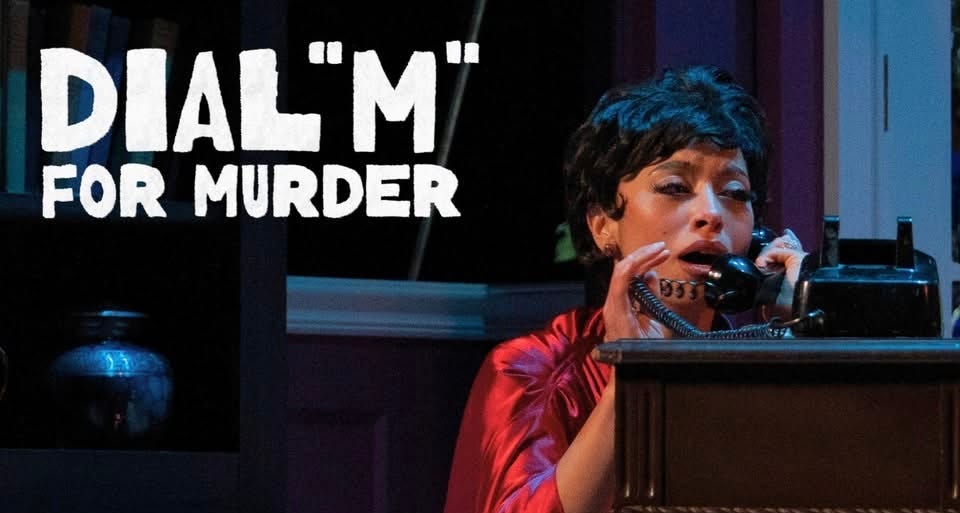
Good morning! I attended yesterday’s performance of Dial “M” for Murder. It was a very enjoyable performance, and everyone I interacted with shared the wonderful sense of hospitality that I’ve come to appreciate with OCP. Kudos to all involved.
I wanted to bring to your attention two issues I encountered as a power wheelchair user (I am quadriplegic following a spinal cord injury a few years ago). The first one is that the automatic door at the northeast entrance (under the canopy) doesn’t seem to be working, or at least the button from the outside is out of order. I saw a number of people trying to use it with no luck. I also noticed this issue when I was there for Disaster, so it’s been a problem for a while. If it can’t be fixed (or, rather, until it can be fixed) could you place an usher there, before and after each performance? Yesterday I arrived less than an hour before curtain, and I had to wait outside until another couple arrived to try that door as well, and one of them was able to open and hold the door for me.
The other issue I had related to the wheelchair seating area (yesterday I was in center section, 20-2). I appreciate that there is space available for us to sit in our wheelchairs and enjoy the show, but could you please highlight to staff and ushers that we also need the space cleared so we can enter and exit those areas? Yesterday there was a straight chair (not a folding one) right behind my seat; I could carefully maneuver my way into my space but I could not get out again without help. There were also quite a few (8 or more) folding chairs along that center back aisle that were already set up, so as people walked along that aisle (as many did, especially if they had come in the wrong door) they bumped against my wheelchair — as you can imagine, that is a very uncomfortable sensation — and I counted at least 30 bumps. People would say they were sorry as they passed, but it made me feel like I was in the way. It would be better if those chairs could stay folded until/unless the ushers need them. Reminding people that we not only need our seats cleared but also the path to/from those seats (and, the path for folks cutting through to the other side of the theater) would go a long way toward improving my experience.
I will be back next month for Mary Poppins and have already purchased the full season tickets for next year, and I look forward to enjoying many more shows with OCP. I know the Hawks Mainstage wasn’t designed with wheelchair accessibility in mind, and it’s not ideal that wheelchair-users usually have to sit in the back row (I think there’s only one accessible seat further up in the auditorium?). Addressing the two issues I mention here would go a long way toward improving my experience by helping me feel more like a welcome guest, not like I’m in the way.
Thanks for listening,
Debbie Creamer
Sent from my iPad with voice dictation
By posting my email here, I don’t mean to shame or even call out the Omaha Community Playhouse — they are more accessible than many places I go, and individuals there seem eager to make sure I’m comfortable — but it’s just a simple example of the everyday challenges/opportunities I find myself experiencing and trying to address. I’ve sent similar notes to a number of places I’ve visited; now that I’m more able to get around, the more barriers and not-best practices I encounter. (On the other hand, the more pleasant surprises and intentional accessibility I notice too.)
I sent this email on Monday morning; it’s now Wednesday noon and I haven’t had a reply. I’ll add a comment/update here when/if I do!
~~~
p.s. if you know of another good disability advocacy timeline beyond the Temple one I linked above, please share! I think I used a different one when I was teaching/speaking more often, but I’ve lost it.
Excellent work that I’m sorry you’re called on to do!
I need to do so much more of you are doing! I love that you are advocating for all of us! I have encountered all that you are saying and having only been handicapped for 2 years, I realize that I would not have noticed what handicapped people have to go through before my surgery unless you live in their shoes. Great job, Debbie!